
Nasir Ahmed’s “discrete cosine transform” is a widely used transformation technique used in signal processing and compression of data. In simple words, every time you send an image or a video on any social media app or watch Netflix in high definition, you should be thankful to Nasir Ahmed.
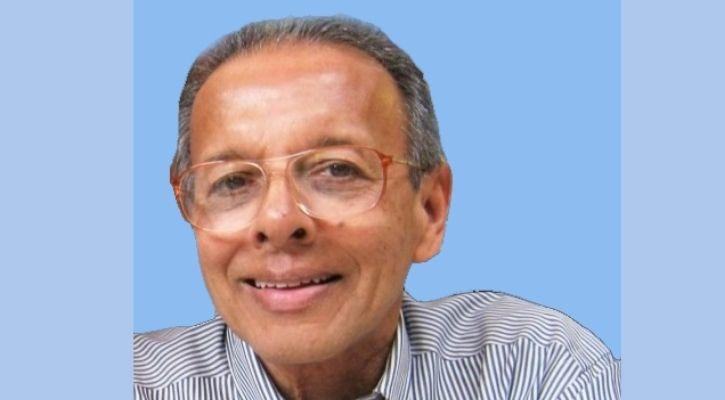
Originally from Bengaluru, Karnataka, Ahmed moved to the United States in 1961 to pursue a Master’s degree. During his PhD at the University of New Mexico, Nasir Ahmed came up with “discrete cosine transform”.
“I had no idea that it would become a major contribution… In those days, digital technology was just starting,” he said in a video.
“The algorithm became the most efficient way of taking an image or a video, processing it in a way that it could be compressed and transmitted to any place that you want,” Nasir Ahmed said in an interview.
The technology is used in almost all apps that facilitate data transmission (specifically photos and videos) like Zoom and Facetime. “It makes me feel very happy”, Ahmed said.
Nasir Ahmed’s contribution to tech was brought into focus after his story was reimagined and performed on the hit US show called “This is us”.
Wondering where all discrete cosine transform (DCT) is used? Everything from JPEG images, MPEG-1/MPEG-2/MPEG-4 to Google’s WebP Images and WebM Video, DCT is the driving force for all image and video delivery in high definition in the modern world.
ECE Prof Emeritus Nasir Ahmed’s development of the Discrete Cosine Transform (DCT) algorithm has been called one of the great inventions of the 20th Century. Now Hollywood wants everyone to know about it!
Ahmed’s discovery that led to widespread image and video transmission over the internet was dramatized in season 5, episode 8 of NBC’s “This Is Us.”
Ahmed, 80, served as Chair of the ECE Dept from 1989 to 1994 and Interim Dean of The School of Engineering from 1994-96.
He received his MS and Ph.D. degrees in Electrical & Computer Engineering from UNM in 1963 and 1966. His doctoral dissertation adviser was Dr. Shlomo Karni.
Ahmed was the Leading author of Orthogonal Transforms for Digital Signal Processing, Springer-Verlag (Berlin – Heidelberg – New York), 1975, with K.R. Rao; translated into Russian (1980) and Chinese (1979).
This was the first textbook that included the DCT, and one of the first to present a unified approach to using sinusoidal and non-sinusoidal orthogonal transforms for signal processing.
Credit: Inputs take from website of the university of new mexico